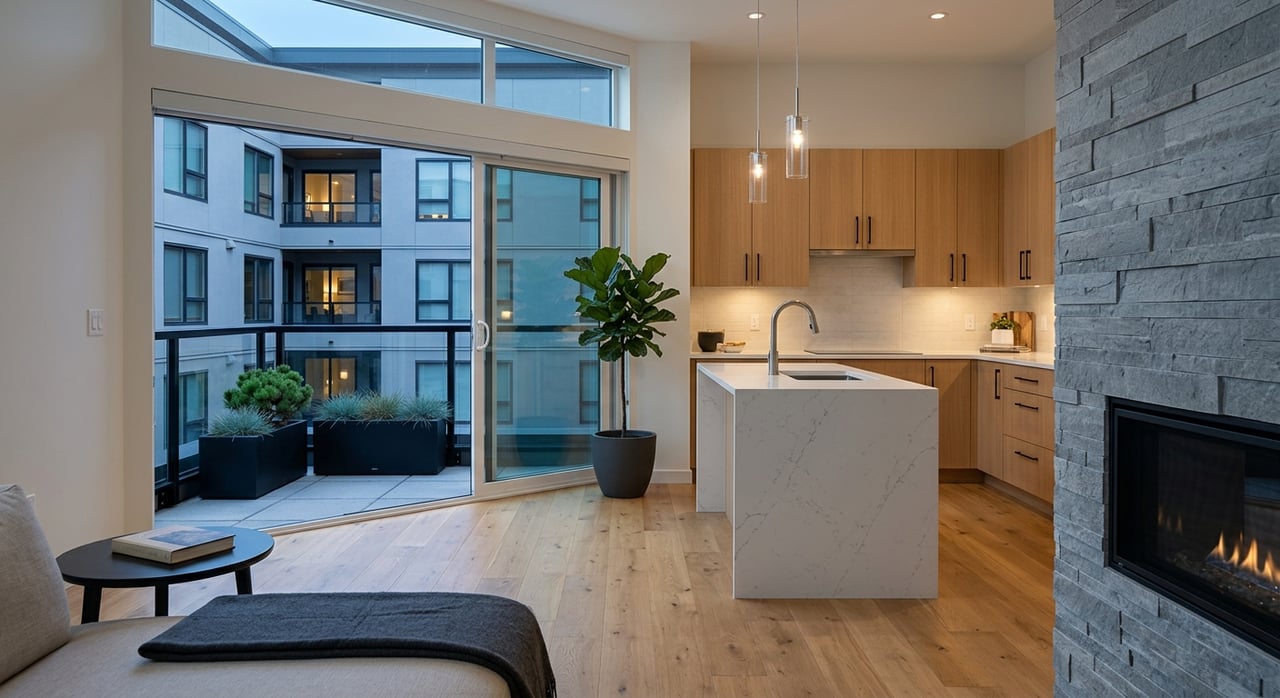
Downtown Salt Lake Condos For Primary And Second Homes
May 7, 2026
May 7, 2026
Looking for a home base that keeps Salt Lake City at your doorstep without the upkeep of a detached house? For many buyers, a downtown condo can make that possible, whether you want a primary residence with easy daily access or a second home that simplifies time in the city. The key is knowing how downtown living works in Salt Lake City, what condo ownership really includes, and which details deserve extra attention before you buy. Let’s dive in.
Downtown Salt Lake City is the most urban part of Utah and serves as the region’s center for commerce, government, culture, and entertainment. The city also highlights direct access to TRAX and FrontRunner, along with bike and pedestrian infrastructure that supports getting around without relying on a car for every trip.
That mix of access and activity is a big reason downtown condos appeal to both primary-home buyers and second-home buyers. If you want a lower-maintenance lifestyle close to restaurants, events, offices, transit, and the airport connection points, downtown offers a very different experience from more traditional residential areas.
It is also worth viewing condo demand in a broader housing context. Salt Lake City’s Housing SLC plan notes rising rents, low vacancies, and ongoing affordability challenges, which means downtown condo demand is shaped by both lifestyle goals and the larger local housing picture.
One of the biggest mistakes buyers make is treating downtown condo inventory as one category. In reality, the city describes the area as a mix that includes renovated loft spaces, high-rise living, and older housing types in and around the core.
That variety matters because your ownership experience can look very different from one building to the next. A loft-style property may feel more design-forward and adaptive, while a tower may offer a more structured shared-building environment with broader common-area systems and more formal association oversight.
For taller buildings, there is also an added operational layer to understand. Salt Lake City Fire defines a high-rise as a building with a floor 75 feet or more above the lowest fire-department vehicle access point, and those buildings are inspected annually.
Downtown redevelopment also points to a strong mixed-use environment. Recent projects in the area have combined residential uses with retail, commercial space, public passageways, and open space, reinforcing the urban, vertical, and multi-use character many buyers are seeking.
If you plan to live downtown full time, a condo can offer a practical way to simplify everyday life. Shared maintenance responsibilities, close-in location, and transit access can reduce the amount of time you spend on home upkeep and commuting.
This can be especially appealing if you value convenience over yard work or a large exterior footprint. For many full-time buyers, the benefit is not just the unit itself. It is the ability to live near the center of city activity while relying on shared building systems and association-managed common areas.
Downtown can also be a strong fit if you want a more connected, urban routine. The city’s emphasis on walkability, bike infrastructure, and regional transit gives buyers a lifestyle option that feels different from more residential foothill or suburban settings.
A downtown Salt Lake condo can also make sense as a second home if you want a lock-and-leave property with easy access to the city. Buyers who travel often, work remotely part of the year, or already own in places like Park City may appreciate having a convenient Salt Lake base.
Based on the city’s downtown transit and amenity profile, this type of setup is often a natural fit for frequent travelers and buyers who want quick connections across the region. In many cases, the draw is simple: less maintenance, easier arrival and departure, and a location close to cultural venues, dining, and transportation.
That said, second-home buyers should be especially careful not to assume flexibility that a building may not actually allow. The words “second home” and “downtown” do not automatically mean you can lease the property however you want, or use it for short stays in the way you may have seen in other markets.
Before you buy any downtown condo, it helps to understand the basic condominium framework under Utah law. In general, the homeowners association is responsible for maintaining, repairing, and replacing common areas and facilities, while the unit owner is responsible for the unit itself unless the recorded declaration says otherwise.
That division of responsibility is one reason condos appeal to buyers who want lower-maintenance ownership. Common areas are shared and undivided, so the association manages building-wide elements rather than each owner taking care of them separately.
HOA dues are also more than a routine monthly line item. In practical terms, they fund shared maintenance, project insurance, and future capital replacement for the building.
Utah law requires a condominium association to maintain blanket property insurance and liability insurance for the project to the extent reasonably available. The law also requires a reserve analysis, a reserve-fund line item in the annual budget, annual disclosure of the reserve summary to owners, and a separate reserve fund.
The reserve analysis must be done at least every six years, with updates at least every three years, unless the declaration provides otherwise. For you as a buyer, this is important because it gives context for whether the building is planning for future repairs and replacements in an organized way.
You also have the right under Utah law to access the reserve analysis on request. That makes the budget, reserve summary, and master insurance details some of the most useful due-diligence documents when comparing downtown buildings.
A condo with lower dues is not always the better value if reserves are thin or major future expenses are not well planned. Looking beyond the sticker price can help you avoid surprises after closing.
If there is one topic second-home buyers should never gloss over, it is rental policy. Under Utah law, a condominium association may restrict or prohibit rentals only through the declaration or an amendment to it, and it may set a minimum lease term of six months or less by rule.
That means rental rules are highly building-specific. You should not assume that because one downtown condo permits leasing, another one nearby will follow the same structure.
Utah law also includes several exemptions when a building restricts rentals. These can include military deployment, certain family occupancy, short employer relocations, some entity and trust ownership structures, and certain pre-existing rentals that were in place before the restriction was recorded.
There are also limits on what an association can require from owners of rental units. In general, an association may not require approval of a tenant, a rental application, a credit report, a background check, or a lease agreement, and it may not charge an extra assessment, fine, or fee solely because a unit is rented, subject to a limited exception for some communities with at least 35% rentals.
Some buyers hear “downtown” and assume short-term rental use will be simple. In Salt Lake City, that is not a safe assumption.
The city classifies dwellings rented for less than 30 days as short-term rentals. According to the city’s planning FAQ, short-term rentals are generally not allowed in residential zones and are allowed by zoning in Mixed-Use, Downtown, and Gateway zones, but they are still not eligible for a business license because the city does not currently issue short-term-rental licenses.
For buyers, the takeaway is clear. If you are considering a downtown condo as a second home and want any kind of rental flexibility, you need to review both the building’s governing documents and the city’s current rules very carefully.
Some buyers are deciding between a downtown condo and a home in areas closer to the foothills. Salt Lake City’s East Bench, which sits at the base of the Wasatch foothills, offers a very different setting and housing character.
The city describes the East Bench as the easternmost community in Salt Lake City, with older distinctive homes in the western part of the area, newer contemporary homes on the eastern slopes, and major institutions such as the University of Utah, Research Park, and the VA hospital. Historic areas like Yalecrest and The Avenues are described through their architecture, mature trees, setbacks, and traditional street patterns.
By contrast, downtown stands out for density, mixed-use living, and stronger transit orientation. If you want vertical living, shared amenities, and easier access to the urban core, downtown is often the better fit.
If you want a more traditional residential setting with strong foothill and open-space identity, east-bench neighborhoods may align better with your goals. The East Bench Preserve, with 42 acres of foothills open space and a segment of the Bonneville Shoreline Trail, reinforces that outdoor-access advantage.
In practical terms, downtown condos tend to work best for buyers who prioritize convenience, access, and lower-maintenance ownership. That can include full-time residents who want to be close to work and city amenities, as well as second-home buyers who want an efficient Salt Lake base.
They are often a strong match if you value walkability, transit, cultural access, and easy regional connections. They may be less ideal if your top priority is detached-home privacy, a yard, or the least possible association oversight.
The right fit usually comes down to how you want to live day to day. A condo can be a smart solution, but only if the building’s rules, finances, and maintenance structure align with your plans.
When you are comparing downtown Salt Lake condos, careful due diligence matters as much as location or finishes. A polished lobby or stylish unit does not replace the need to understand how the building actually operates.
Here are the key items to review before moving forward:
This is where a guided, detail-oriented buying process can make a real difference. The best condo purchase is not just about choosing the right floor plan. It is about matching your goals with a building that supports them.
Whether you are looking for a primary residence in the city or a second home that makes Salt Lake living easier, a thoughtful building-by-building review can save time, reduce risk, and help you buy with confidence. If you want experienced guidance on evaluating condo options in Salt Lake City and across the broader resort-to-valley market, Cathy Richards can help you navigate the details with a clear, high-touch approach.

Cathy & Ilies are dedicated to helping you find your dream home and assisting with any selling needs you may have. Contact us today to start your home searching journey!