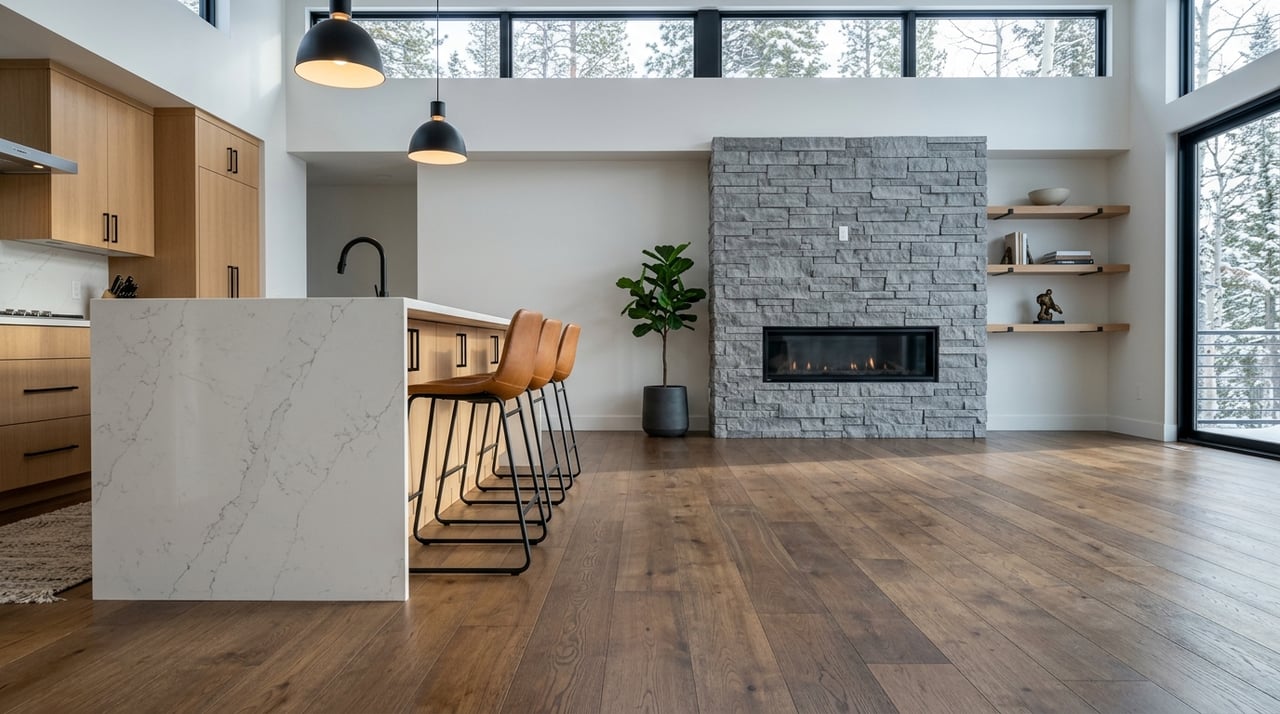
Pricing Luxury Homes In Park City And Deer Valley
April 16, 2026
April 16, 2026
If you price a luxury home in Park City or Deer Valley like it is competing with the entire market, you can miss your buyer by a mile. In this resort-driven area, pricing is not just about square footage or a neighborhood name. It is about micro-market position, ski access, views, condition, and timing. If you are preparing to sell, understanding those moving parts can help you protect value and avoid unnecessary days on market. Let’s dive in.
Park City and Deer Valley are not one uniform luxury market. According to the Park City Board of REALTORS quarterly stats release, average monthly residential inventory rose 14% from 2024, and the 2025 absorption rate was 5.2 months. The same report noted that homes below the median tended to sell faster, while homes above the median moved more slowly, especially at the highest price points.
That matters because broad averages can be misleading. The municipal and board data show strong variation by property type, price tier, age, amenity set, and location. In other words, a well-positioned luxury listing in one part of Deer Valley may not be directly comparable to another luxury home just a few minutes away.
The best pricing strategy usually begins with the smallest credible comp set. That means looking at homes with similar location, access, condition, and buyer appeal rather than pulling every recent sale in Park City.
The 2025 market data shows how wide the range can be. Single-family annual medians closed around $3.4 million in Old Town, $4.31 million in Lower Deer Valley, $7.48 million in Upper Deer Valley, $12.03 million in Deer Crest, and $14.51 million in Empire Pass. On the condo side, annual medians ranged from about $1.11 million in Old Town to $6.32 million in Empire Pass, according to the same Park City market report.
Those numbers make one thing clear: your home is not competing with all of Park City. It is competing with a narrower set of properties that speak to the same buyer.
A legacy home in a core Deer Valley location may appeal to a different buyer than a newer, slope-adjacent residence with modern finishes. A drive-to-resort property may also sit in a different pricing lane than a ski-in/ski-out home, even if both carry the Deer Valley name.
The local board specifically calls out ski-in/ski-out access versus drive-to-resort access as a major dividing line. It also notes that market performance varies by age, amenities, location, price tier, and property type. That is why accurate luxury pricing starts with precision, not broad averages.
In many luxury markets, location is a general concept. In Deer Valley, access can be a direct pricing factor.
According to Deer Valley Resort’s expansion update, the resort is adding nearly 100 new ski runs, 10 new chairlifts, and the East Village Express gondola, while more than doubling skiable terrain. The project also includes a new base village and additional access along U.S. Route 40, plus 1,200 day-skier parking spaces.
For sellers, that means access should not be treated as a vague lifestyle perk. It is a measurable part of how buyers may judge value, especially as resort infrastructure changes how people move through the area.
One common pricing mistake is blending every premium into one high number. A better approach is to separate the value drivers.
For example, your home may deserve one adjustment for ski access, another for view quality, and another for renovation level. This helps create a more defensible asking price and makes it easier to explain why your home is positioned above or below nearby listings.
In Park City and Deer Valley, views are often discussed casually. Buyers, however, do not treat them casually.
Research cited in the report supports the idea that desirable views can create measurable premiums. A peer-reviewed property study found that aesthetic views can influence price significantly, and related research has shown meaningful premiums for park or scenic outlooks in some settings. While the exact percentage will vary by property and location, the takeaway is simple: an unobstructed mountain, slope, or valley view should be considered directly in pricing.
When two luxury homes have similar size and finish level, the difference in outlook can matter. A protected ridgeline view, broad ski run outlook, or dramatic valley exposure may attract stronger buyer interest than a home with partial or more limited sightlines.
That does not mean every view deserves the same premium. It means view quality should be judged carefully and compared against similar recent sales, not folded into general marketing language.
Luxury buyers in this market often want move-in-ready homes. The local board report says there is strong demand for new or recently renovated properties, while buyers show resistance to major remodeling projects.
That trend lines up with national data. The 2025 NAR Remodeling Impact Report says 46% of home buyers are less willing to compromise on condition. It also found that several practical upgrades offer strong cost recovery, including a new steel front door, closet renovation, window replacement, and certain kitchen improvements.
If your home has recent improvements, that may support a stronger launch price. Buyers often pay for convenience, especially in a resort market where many are balancing a move, a second residence, or an out-of-state purchase.
If your home is older or more dated, pricing may need to be sharper. That does not mean the property lacks value. It means the asking price should reflect the buyer’s likely cost, time, and uncertainty around future updates.
Luxury sellers often focus on neighborhood first, but price band is just as important. The 2025 board data indicates that homes above the median tend to move more slowly, especially at ultra-high price points.
That is why trophy homes should be evaluated against recent sales in the same tier, not lower-priced homes that sold faster in the same area. Park City also recorded a distinct trophy segment in Canyons and White Pine Canyon Road, where ten mega-homes sold at an average above $17 million, according to the same market release. Different pricing tiers often mean different buyer pools, timelines, and negotiating patterns.
Park City is a seasonal resort market, and seller strategy should reflect that. A Park City municipal economic study shows that winter and summer are peak visitor seasons, while shoulder seasons like April-May and October-November often experience lower occupancy.
Real estate demand follows some of that same rhythm. The 2025 board report says late snow conditions affected ski-season sentiment and reduced rental income, while buyers were transacting later into the fall than in prior years. That means timing still matters, but the right launch plan depends on both market conditions and the kind of buyer your home is most likely to attract.
Winter visibility and summer lifestyle appeal can both support strong interest. During softer shoulder periods, pricing and presentation often need to work harder.
That is where a clear value story becomes especially important. If your property is not launching in a peak window, buyers need an immediate reason to understand the price through its access, views, finishes, and overall position in the market.
If you are pricing a luxury home in Park City or Deer Valley, a tiered method is often the most effective approach.
Use recent sold listings that match your home in:
Then look at the features that can justify a price difference, such as:
The local board report even noted that golf memberships attached to lots were seen trading roughly $800,000 to $1 million above similar lots without that option. That is a strong reminder that rare amenities can matter in a meaningful way.
Finally, align price with timing and likely demand. If your home is fully updated and entering the market when buyer activity is strong, your pricing window may be broader. If the property is dated or launching in a softer seasonal period, your strategy may need to be more conservative from day one.
A luxury asking price should do two things at once: protect your value and attract the right buyer pool. In a segmented market like Park City and Deer Valley, overpricing can narrow attention quickly, especially once buyers compare your home against newer or better-positioned alternatives.
The strongest pricing strategy is usually not the highest possible number. It is the most credible number, supported by the right comps and a clear explanation of what makes your property stand out.
If you are weighing when and how to bring a home to market, working with an advisor who understands Park City’s micro-markets, presentation standards, and luxury buyer behavior can make the process more strategic from the start. If you would like a tailored pricing conversation, Cathy Richards would be happy to help.
Cathy & Ilies are dedicated to helping you find your dream home and assisting with any selling needs you may have. Contact us today to start your home searching journey!