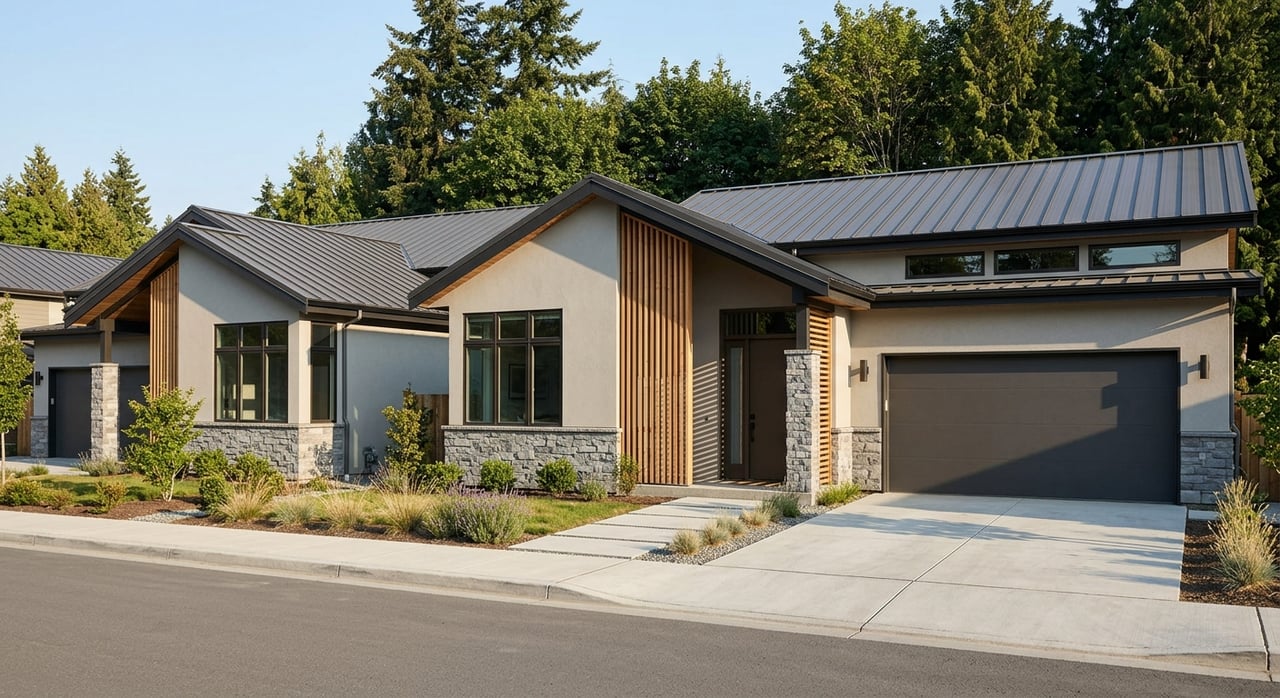
Heber And Midway New Construction Opportunities
May 14, 2026
May 14, 2026
If you are considering new construction in Heber or Midway, you are not alone. This part of Wasatch County gives you a rare mix of mountain views, newer housing options, and communities that range from flexible infill neighborhoods to private club settings. If you want to understand where the real opportunities are, what different communities offer, and what tradeoffs come with each option, this guide will help you sort through it clearly. Let’s dive in.
Heber and Midway sit in the same growth corridor, but they do not approach development in the same way. Heber City manages zoning, subdivisions, design criteria, open space, and ridgeline protection through its planning framework, while Midway reviews concept plans, planned unit developments, rural-preservation subdivisions, and small-scale subdivisions through a more closely shaped planning process.
That difference shows up in what you will see on the ground. Midway’s 2023 General Plan emphasizes preserving a historic rural and country atmosphere, directing density closer to the core, and maintaining the city’s Swiss and European identity with water-conscious landscaping. In practical terms, that means many new construction opportunities in the valley are carefully planned communities rather than scattered one-off projects.
Price is one of the first differences most buyers notice. March 2026 data showed a median sale price of about $704,495 in Heber and about $1,112,000 in Midway.
That does not mean every Heber home is affordable or every Midway home is ultra-luxury. It reflects the product mix. Heber has a broader range that includes townhomes, cottages, standard single-family homes, and larger new builds, while Midway tends to lean more heavily toward estate lots, infill luxury, and design-driven communities.
If you are looking for a private, amenity-rich setting, Red Ledges is one of the best-known options in the area. The community spans more than 2,000 acres with 1,200 homesites, about 500 completed homes, and about 90 more homes in design review or construction.
Homesites currently range from roughly 0.54 to 2.08 acres. Community information describes homes from about $1.4 million to $10 million or more, while the Village Center Cabins page notes those cabins started at $815,000 and offered single-level two- or three-bedroom living. Buyers should also know that construction requires architectural review committee approval, and some listings require a club membership, with golf membership available for a separate deposit.
For buyers who want lower-density living in Midway, The Reserve at Midway is a notable option. It is described as an 83-acre community with 48 custom estate homesites, 30 acres of open space, and planned amenities such as trails, waterfalls, a sports court, pool, viewing deck, and gathering areas.
This type of project appeals to buyers who want space, custom-home potential, and a planned environment without the feel of a high-density neighborhood. It also highlights a common Midway theme: preserving open areas while still offering new housing opportunities.
Not every Midway opportunity is a large estate parcel. Saddle Creek offers a different kind of value with 35 lots, premium half-acre homesites, and no required builder.
That flexibility can be a major advantage if you want more control over your home design and builder selection. At the same time, there are still community standards to account for. Saddle Creek has HOA dues of $125 per month that cover landscaping, maintenance, and winter snow removal, and it uses a three-phase design review process with related review and construction deposits.
Southill is another Midway option, but with more of a village-style infill feel near Main Street. Phase III is available, and buyers can choose from park-front, mountain-view, hillside, or nightly-rentable homesites. Sample homes on the community site are about 3,049 to 3,286 square feet and include features such as private elevators, roof decks, and three-car garages.
Remund Farms also stands out in Midway for its lifestyle package. This 50-acre former farm includes walking trails, parks, large open spaces, an activity barn, pool, lakes, gardens, and playgrounds. Its design approach emphasizes variable setbacks, dark-sky lighting, view optimization, and varied exterior designs.
In Heber, many buyers focus on master-planned neighborhoods with more standardized homes and shared amenities. These communities often offer a more streamlined new-construction experience and can provide more price variety than Midway’s estate-oriented options.
The Crossings starts at $989,900 for single-family homes and advertises a fishing pond, trails, pool, clubhouse, and sports courts. Current floor plans shown by the builder run roughly from 3,949 to 4,656 square feet, and move-in-ready homes are listed around $1.14 million to $1.18 million.
The Crossings Rear Load starts at $929,900 and uses rear-load garages to create a cleaner streetscape. The builder says the community is planned to include the same model-home experience as The Crossings, plus amenities such as a fishing pond, walking trails, pickleball, tennis, basketball, and a future pool and clubhouse.
Deep Creek at Jordanelle Ridge offers one of the more price-accessible new-home opportunities in the broader Heber area. Pulte’s Peak and Canyon series currently show starting prices around $627,990 and $767,990, with plans ranging from about 2,465 to 2,748 square feet.
For buyers looking at lower-maintenance formats, Tava and Montreux add townhomes, cottages, and single-family options on the northeast side of Heber. These communities are positioned near the recreation corridor and broaden the range of entry points into new construction.
Midway’s new construction often comes with more design oversight, lower density, and stronger visual identity. You may find larger lots, open-space planning, and communities that place a high value on architectural cohesion and landscape standards.
That can be a great fit if you want a more curated environment. It can also mean a narrower supply of homes, higher entry points, and more rules around what you can build or modify.
Heber gives you a wider spread of product types and price points. You can look at townhomes and cottages, traditional single-family neighborhoods, or larger amenity-based communities depending on your goals.
For many buyers, that means more options to match budget, timing, and lifestyle. It can also make Heber especially appealing if you want a new home with modern finishes and a more predictable builder process.
One of the biggest reasons buyers pursue new construction in this area is the finish level and efficiency. Bonner Meadows includes quartz countertops, low-E windows, 2x6 exterior walls, a 95% efficient gas furnace, a Wi-Fi thermostat, KitchenAid appliances, soft-close cabinetry, and front-yard landscaping.
Fieldstone’s Crossings homes highlight finished basements, quartz countertops, KitchenAid appliances, and upgraded lighting. Deep Creek plans list granite countertops and stainless-steel appliances. In many cases, you are paying more upfront for newer materials, more current layouts, and lower immediate maintenance needs.
Older resale homes can still offer advantages, especially if you want a larger lot or mature landscaping. One current Midway resale example is a 1978 single-family home on 0.57 acres. But older homes can come with a different maintenance profile, and they may not have the same energy-efficiency features or builder-backed systems that many buyers want today.
New construction here is not just about base price. HOA dues, club fees, and community assessments can play a major role in the total cost of ownership.
For example, Saddle Creek’s HOA covers landscaping, maintenance, and snow removal. Deep Creek notes that community association and golf fees may be required, and Red Ledges may involve club membership requirements depending on the property.
If you are buying a homesite or planning a custom build, design review is a major part of the process. Red Ledges requires architectural review committee approval before construction and regulates height and exterior design. Saddle Creek also has a multi-step design review process.
This is not necessarily a drawback. For many buyers, these standards help protect the overall look and long-term value of a community. Still, it is important to understand the timeline, fees, and restrictions before you commit.
Lot size often tells you a lot about the kind of ownership experience to expect. Red Ledges homesites currently run from roughly 0.54 to 2.08 acres, Saddle Creek offers half-acre homesites, and The Reserve at Midway spreads 48 homesites across 83 acres.
By contrast, communities like The Crossings, Bonner Meadows, Tava, Montreux, and Deep Creek are generally more focused on standardized homes and shared amenities than on large private parcels. Neither is better by default. The right fit depends on whether you value space, convenience, customization, or lower maintenance.
The best way to narrow your search is to start with your real priorities.
Ask yourself:
When you answer those questions honestly, the right communities tend to rise to the top quickly.
New construction in Heber and Midway is not one-size-fits-all. Community rules, design standards, lot configurations, builder packages, and fee structures can vary widely even within the same valley.
That is why a local, consultative approach matters. You want more than a list of developments. You want clear guidance on how a community actually lives, what the ownership costs may look like, and whether the opportunity fits your goals today and long term.
If you are weighing new construction in Midway or Heber and want a clear, data-driven plan, Cathy Richards can help you compare communities, understand the tradeoffs, and move forward with confidence.
Cathy & Ilies are dedicated to helping you find your dream home and assisting with any selling needs you may have. Contact us today to start your home searching journey!