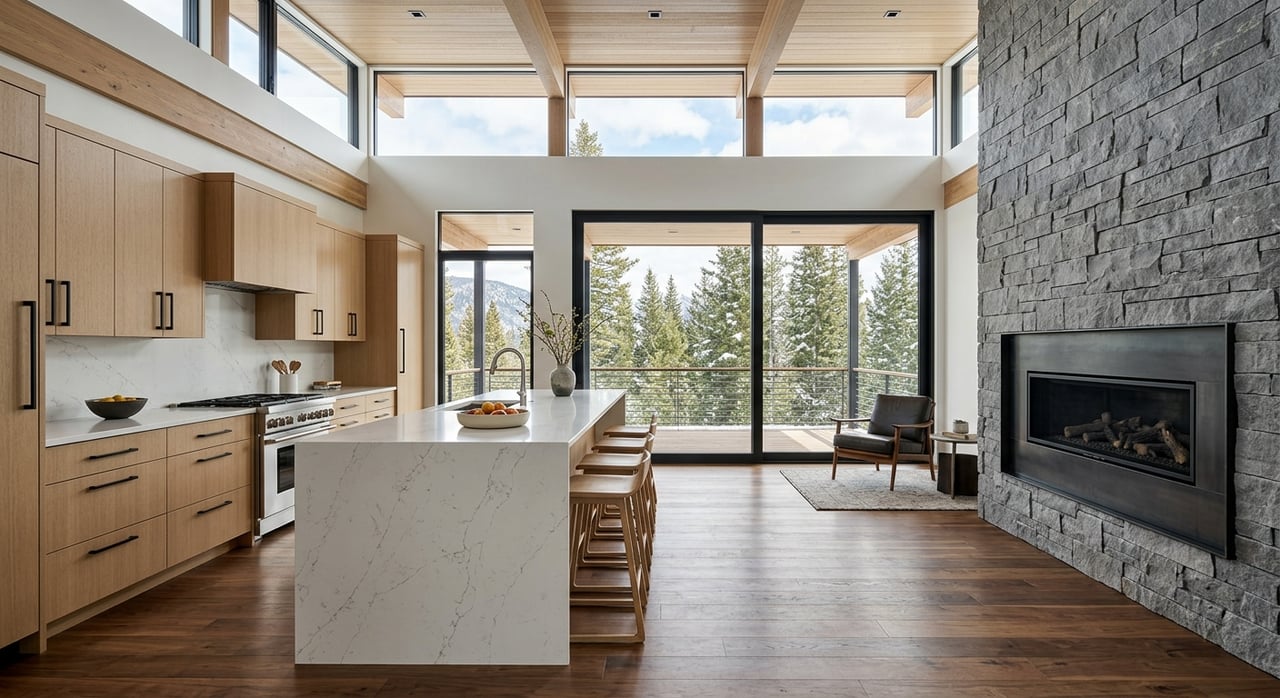
Selling A Home In Snyderville Basin To Resort‑Area Buyers
June 25, 2026
June 25, 2026
If you are selling a home in Snyderville Basin, you are not just competing on square footage or bedroom count. You are selling access, convenience, presentation, and a mountain-market experience that many buyers compare against resort properties across the Park City area. When you understand what resort-area buyers actually look for, you can price more accurately, prepare more strategically, and market your home with much more confidence. Let’s dive in.
Snyderville Basin sits in a unique position within Summit County. It is treated as its own planning district, and properties there are regulated under the Snyderville Basin Development Code. That matters because land use, exterior changes, and property-specific rules can shape both buyer expectations and resale value.
For many buyers, the appeal starts with convenience. Kimball Junction offers access to shopping, dining, and Utah Olympic Park, while free year-round transit connects major neighborhoods, shopping districts, and resort base areas. Park City is also about 35 minutes from Salt Lake City International Airport, which is a meaningful advantage for second-home owners and out-of-state buyers.
Outdoor access is also a core part of the value proposition. Basin Recreation reports nearly 2,500 acres of open space, 185 miles of trails, and a large Fieldhouse that serves the community year-round. In Snyderville Basin, recreation is not just nearby. It is often part of what buyers feel they are purchasing.
One of the biggest mistakes sellers can make is pricing off broad county-wide averages. The Wasatch Back is highly segmented, and local market data shows that value can shift sharply based on condition, style, location, age, view, and available inventory. In other words, two homes in the same broad area may attract very different buyer reactions.
In Q1 2026, Snyderville Basin posted the highest single-family sales volume among major local submarkets, with 78 sales totaling $331.9 million and a median price of $2.869 million. For condos, the Basin recorded 49 sales, $65.4 million in volume, and a median price of $925,000. It was also the only major submarket to post positive first-quarter condo results.
Those numbers are useful, but they are only a starting point. Nearby micro-markets such as Promontory, Jeremy Ranch, Glenwild, and Canyons Village can trade at very different levels. If your home has few direct comparables, pricing should focus on the closest competing product in terms of location, condition, amenities, and buyer appeal.
Resort-area buyers tend to scrutinize homes differently than purely local owner-occupants. Many are comparing several properties in a short visit, and some are making decisions from out of state. That means your home needs to feel clear, polished, and easy to understand from the first photo to the final showing.
Local market reporting points to strong demand for new or recently renovated homes. That does not mean every seller needs a major remodel. It does mean that visible condition, clean maintenance, updated finishes, and a move-in-ready feel can strongly influence how buyers perceive value.
Presentation also carries extra weight in a market where mountain setting matters. Strong photography, tidy exterior spaces, and rooms that feel bright and functional help buyers connect the home to the broader Snyderville Basin lifestyle. Buyers are often evaluating how easily they can arrive, settle in, and start using the property right away.
Before you spend money, focus on updates that improve confidence and clarity. Resort-area buyers often want fewer unknowns, especially if they are balancing a purchase with travel schedules or a remote closing process.
The most worthwhile pre-listing improvements often include:
If you are considering exterior changes or more visible upgrades, check the Snyderville Basin Development Code and any HOA design rules first. Buyers may ask about compliance, and unresolved questions can create hesitation during negotiations.
In Snyderville Basin, trail access, transit, and Kimball Junction convenience are not side notes. They are practical selling points that can shape how buyers use the property throughout the year.
A buyer may care that they can get to shopping and dining easily, use free transit to reach resort areas, or enjoy quick access to trails and recreation without a long drive. For a second-home owner, airport access may carry just as much weight as the kitchen layout. For a full-time owner, everyday convenience may matter just as much as mountain views.
That is why listing strategy should connect these features to real use. Instead of treating them as generic lifestyle language, present them as daily benefits that support ease, flexibility, and year-round enjoyment.
Prepared sellers often create smoother deals. In Snyderville Basin, that is especially important when buyers are reviewing HOA rules, rental limitations, budgets, and property use details as part of their decision.
Utah’s HOA homebuyer guidance says buyers should review reserve levels, budget strength, design rules, rental restrictions, insurance coverage, and common-area upkeep. Underfunded reserves or unclear rules can affect buyer comfort, monthly cost expectations, and future planning.
Before showings begin, try to organize the documents buyers are most likely to request, including:
Having these materials ready early can help serious buyers move faster and with fewer surprises.
Mountain-market buyers often pay close attention to environmental and operating concerns. Utah DEQ says sellers must disclose hazardous conditions such as radon gas in the house or well and should provide test results when available.
That makes radon testing a smart pre-listing step if you do not already have current information. It is much easier to address questions up front than to scramble after a buyer raises concerns during due diligence. Clear documentation can also help reinforce that the home has been responsibly maintained.
Insurance costs may also matter to some buyers, especially as local market reporting notes that insurance continues to affect parts of Summit and Wasatch Counties. You do not need to overstate the issue, but it helps to be ready for questions if a buyer wants to understand current coverage or property-related costs.
The broader Park City market remained active in Q1 2026, with 529 transactions and $1.195 billion in volume. On a rolling 12-month basis through March 31, 2026, sales reached $5.636 billion, up 9% from the prior 12 months. Active listings have been relatively stable, hovering around 800 to 900 since 2022, which is still below the pre-COVID range.
That means sellers are not dealing with an oversupplied market. Still, buyers have become more deliberate. Local reporting points to volatility affecting some high-net-worth buyers, elevated mortgage rates for more finance-sensitive segments, and continued attention to carrying costs.
Because of that, strong preparation often matters more than trying to guess the perfect week to list. That said, periods when more buyers are already visiting Park City, such as ski season, summer recreation windows, and fall travel, may create stronger in-person exposure. If your home is ready, those high-traffic periods can be especially valuable.
Many Snyderville Basin buyers are experienced and well-informed. Some may be cash buyers, particularly in the luxury segment, but that does not mean they overlook details. In fact, buyers who can move quickly often expect excellent presentation and complete documentation.
Your leverage usually improves when the listing feels easy to evaluate. A well-priced home with strong visuals, clean disclosures, HOA materials, and clear property details reduces uncertainty. That can lead to smoother negotiations, stronger terms, and less back-and-forth once an offer comes together.
If your home offers a rare combination of condition, access, and convenience, your marketing should make that case clearly. In a segmented market, the story behind the property matters almost as much as the statistics.
Snyderville Basin is not a one-size-fits-all market. Buyers may be comparing primary homes, second homes, condos, townhomes, and luxury properties across several nearby submarkets at once. That is why a generic pricing plan or broad lifestyle pitch rarely does enough.
The strongest selling strategy is specific to your property. It should reflect your exact location, your home’s condition, the documents a buyer will want to review, and the practical benefits that matter most in this resort-adjacent market. When those pieces come together, your home is positioned to stand out for the right reasons.
If you are thinking about selling in Snyderville Basin, a tailored plan can make all the difference. For a concierge-level strategy built around local market intelligence, premium presentation, and hands-on guidance, connect with Cathy Richards.

Cathy & Ilies are dedicated to helping you find your dream home and assisting with any selling needs you may have. Contact us today to start your home searching journey!